Bringing a new nanny into your home is a major decision. It’s not just about finding someone who can watch your child—it’s about welcoming a new person into your family’s daily life and trusting them with your most precious treasure. The nanny trial period is the crucial first step to make sure this new relationship starts on the right foot.
If you’re a Houston family looking for new nanny tips or want to understand how to set up and navigate a nanny onboarding process that leads to success, this guide will walk you through everything you need to know. From planning and communication to evaluation and constructive feedback, you’ll learn how to create a trial period that benefits your child, your nanny, and your entire household.
Why the Nanny Trial Period Is So Important
The trial period isn’t just a “test” for your nanny; it’s an opportunity for everyone to adjust, learn, and build trust. It’s a time to:
Evaluate Skills and Compatibility: Seeing your nanny in action helps you assess how well they follow your instructions, connect with your child, and handle daily routines and unexpected situations.
Set Clear Expectations: Early on, you can clarify what duties are essential, discuss household rules, and establish communication preferences.
Build Mutual Trust: The first few days or weeks allow your nanny to feel welcomed and supported, which encourages loyalty and long-term commitment.
Catch and Address Concerns Early: If any challenges arise, you can address them quickly before they become bigger problems.
Many families skip or rush through this phase, which often leads to misunderstandings, frustration, or even the need to rehire quickly. A positive trial period lays the foundation for a long-lasting, happy working relationship.
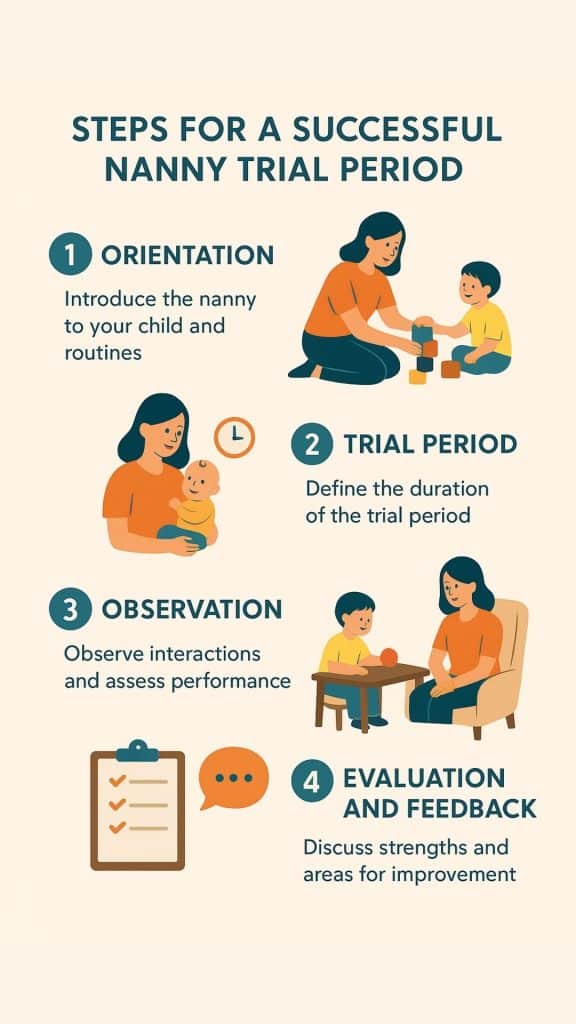
Planning Your Nanny Trial Period: Step-by-Step
1. Set Clear Expectations Ahead of Time
Before your nanny’s first day, have an honest conversation about:
Duties and Responsibilities: Outline daily tasks, from diaper changes and meal prep to driving or light housekeeping.
Schedules and Hours: Be clear about start and end times, flexibility needed, and any overtime policies.
Discipline and Childcare Philosophy: Share your approach to discipline, screen time, nap routines, and any specific needs your child has.
Communication Style: Decide how and when you want updates—texts, calls, or written notes—and how often
Providing a written job description or family handbook can be incredibly helpful to avoid confusion.
2. Start Small, But Long Enough to Observe
A trial period of 1 to 2 weeks is ideal. This timeframe lets you see the nanny’s consistency and adaptability without overwhelming your family or the new hire. If needed, extend the trial with mutual agreement.
3. Orientation and Warm Welcome
The first day should include:
A tour of your home, highlighting safety features, emergency exits, and baby-proofed areas.
A review of your child’s routine, favorite toys, and comfort items.
Clear instructions on emergency contacts, medical info, and allergy or medication protocols.
Introduction to other household members or pets.
Making your nanny feel welcome and supported from the start sets a positive tone.
4. Be Present and Observant
If possible, spend time with your nanny during the first days to observe interactions with your child and how they handle basic tasks. This hands-on time helps you gauge natural chemistry and allows the nanny to ask questions.
5. Communicate Openly and Frequently
Daily check-ins—even just 10 minutes—give you and your nanny a chance to share observations, clarify concerns, and celebrate successes. Be honest but kind in your feedback, and encourage your nanny to share their thoughts too.
What to Look for During the Trial Period
As you observe your nanny, consider:
Punctuality and Reliability: Does your nanny arrive on time and prepared? Reliability is non-negotiable.
Engagement with Your Child: Are they attentive, affectionate, and responsive to your child’s needs and moods?
Safety Awareness: Do they follow safety protocols, monitor your child carefully, and handle emergencies calmly?
Following Instructions: Does the nanny respect your routines and rules, or do they improvise in ways that concern you?
Communication: Is your nanny clear, respectful, and proactive in updating you on your child’s day?
Problem Solving and Flexibility: How do they handle unexpecttried issues like tantrums, spills, or schedule changes?
Handling Challenges During the Trial Period
No relationship is perfect from day one. If challenges emerge:
Address issues directly and kindly, focusing on specific behaviors rather than personality.
Offer solutions or adjustments. For example, if your nanny struggles with a feeding routine, provide more detailed guidance or a demonstration.
Give the nanny a chance to improve, but set clear expectations and timelines.
If fundamental mismatches arise, it’s better for everyone to part ways sooner rather than later.
Legal and Payment Considerations
Pay for the Trial Period: Your nanny should be compensated for their time during the trial, whether it’s a paid trial day or week.
Set Clear Terms: Outline how long the trial lasts and what criteria will determine a successful outcome.
Contracts: Use this time to review the nanny contract together, clarifying duties, pay, benefits, and termination policies.
Testimonials from Families Who Nailed Their Trial Period
"Our nanny trial period made all the difference. We got to see how she interacted with our twins and gave us great feedback on what was working and what wasn’t. It helped us avoid costly mistakes and build a strong relationship right away." — Michelle and James B., Houston
"We learned so much during the trial. Having daily conversations helped us all stay on the same page and made the transition smoother. Our nanny feels like part of the family now." — Karen L., Houston
Visual Guide: Creating a Positive Nanny Trial Period
Frequently Asked Questions About Nanny Trial Periods
Q: How long should the trial period be? A: One to two weeks is ideal, but it can be extended if needed.
Q: Should I pay my nanny during the trial? A: Yes, a trial period is paid.
Q: What if the nanny isn’t a good fit? A: Address concerns early, and if necessary, end the trial respectfully and search again.
Q: How do I give constructive feedback? A: Be specific, positive when possible, and focus on solutions.
Q: Can a trial period prevent future issues? A: Absolutely. It’s key to establishing clear expectations and trust.
Ready to Start Your Nanny Trial Period With Confidence?
Elite Nanny League helps Houston families craft positive onboarding experiences and trial periods that lead to lasting, happy nanny placements. Contact us today to get expert guidance and find the perfect nanny for your family.