When families begin the search for childcare, one of the first questions they ask is:
How long does it take to hire a nanny?
And usually, that question comes with urgency.
- “We need someone in the next two weeks.”
- “Our current childcare just fell through.”
- “We’re starting new jobs soon.”
The desire for a fast solution is completely understandable.
But here’s the reality:
Hiring the right nanny takes time — and that time is essential.
Because this is not just about filling a role.
It’s about finding someone who will:
- Care for your children daily
- Integrate into your household
- Build long-term trust
In this guide, we’ll break down the typical nanny hiring timeline, what factors affect it, and why rushing the process can lead to costly mistakes.
The Short Answer: Typical Hiring Timeline
On average, hiring a nanny takes:
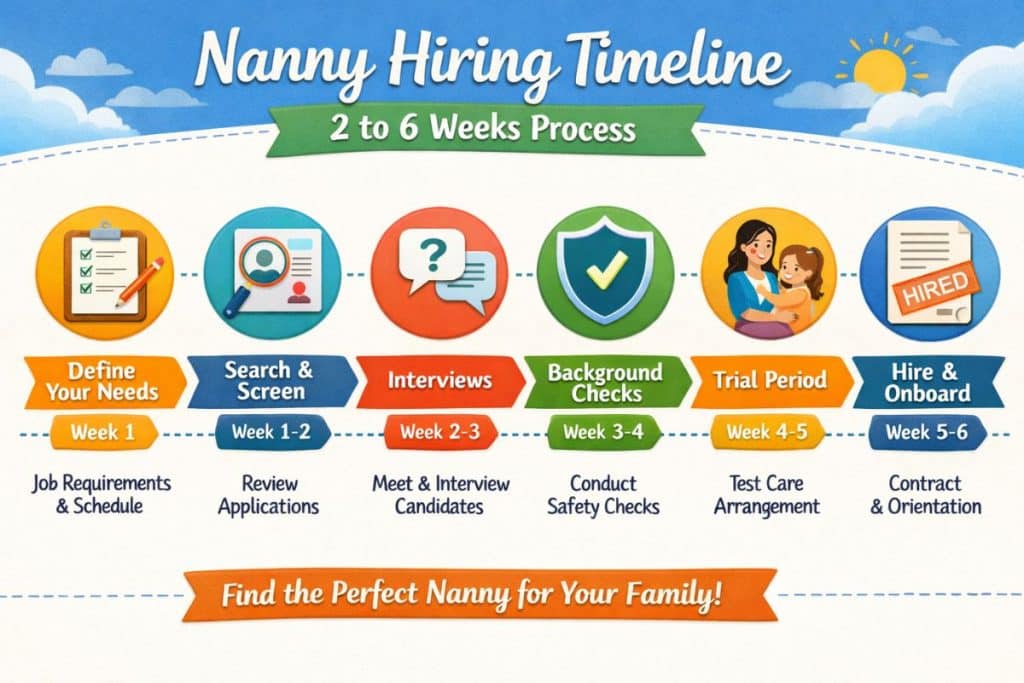
2 to 6 weeks
However, this can vary depending on:
- Your requirements
- Candidate availability
- Flexibility in schedule
- Level of screening
High-quality, long-term placements often take closer to:
3 to 6 weeks
This is because they involve:
- Thorough vetting
- Careful matching
- Multiple interview stages
Why Hiring a Nanny Takes Time
1. It’s a High-Trust Role
Unlike most hires, a nanny works inside your home and cares for your children.
This requires:
- Thorough background checks
- Verified references
- Strong interpersonal compatibility
The Federal Trade Commission emphasizes the importance of careful vetting when hiring household employees:
This level of diligence cannot be rushed.
2. Fit Matters More Than Speed
A nanny may look perfect on paper but still not be the right match.
The best placements consider:
- Personality compatibility
- Parenting style alignment
- Communication style
As discussed in Why High-Quality Nanny Placements Focus on Fit Over Speed, rushing often leads to mismatches and early turnover.
3. Top Candidates Are Selective
Highly qualified nannies:
- Often have multiple offers
- Take time to evaluate families
- Prefer structured roles
This means the process is not just about you choosing them — they are also choosing you.
Breakdown of the Nanny Hiring Timeline
Week 1: Defining Your Needs
Before you even begin interviewing, you must clarify:
- Schedule
- Responsibilities
- Compensation
- Expectations
Many delays happen because families skip this step.
To avoid issues later, review:
How to Set Clear Expectations With Your Nanny From Day One
Week 1–2: Sourcing Candidates
This stage involves:
- Posting job listings (if DIY)
- Reviewing applications
- Initial outreach
If working with an agency, this step is handled for you.
As explained in What Does a Nanny Agency Actually Do?, agencies pre-screen candidates before presenting them.
Week 2–3: Screening and Interviews
This includes:
- Phone interviews
- Video or in-person interviews
- Evaluating communication and experience
Families should also watch for warning signs, as outlined in:
Red Flags to Watch for During the Nanny Interview Process

Week 3–4: Reference Checks and Trial Days
Before making a final decision:
- References should be verified
- Trial days may be scheduled
This helps confirm:
- Reliability
- Compatibility
- Real-world performance
Week 4–6: Offer and Onboarding
Once a candidate is selected:
- Offer is extended
- Contract is finalized
- Start date is agreed upon
From here, onboarding begins.
The first month is critical, as discussed in:
The First 30 Days With a New Nanny
Factors That Affect the Timeline
1. Your Requirements
The more specific your needs, the longer the search may take.
For example:
- Live-in roles
- Travel requirements
- Specialized experience
2. Flexibility
Families with flexible schedules and expectations often hire faster.
3. Compensation
Competitive pay attracts stronger candidates more quickly.
For guidance, review:
How to Pay Your Nanny Legally (And Avoid Costly Mistakes)
4. Location
In competitive markets, demand for experienced nannies is high.
This can impact availability and timing.
5. Hiring Method
DIY Hiring
- Faster initial access to candidates
- Slower due to screening and filtering
Agency Hiring
- Slightly longer upfront
- Faster overall due to pre-screened candidates
The Risk of Hiring Too Quickly
Many families attempt to speed up the process.
This often leads to:
- Poor fit
- Miscommunication
- Early termination
As discussed in Why Most Nanny Placements Fail in the First 90 Days, rushed decisions are one of the leading causes of placement failure.
What Happens When You Rush
Short-Term Gains
- Quick hire
- Immediate coverage
Long-Term Costs
- Rehiring process
- Disrupted routines
- Emotional impact on children
The cost of rehiring often exceeds the benefit of hiring quickly.
How to Speed Up the Process (Without Sacrificing Quality)
1. Be Clear From the Start
Define your needs early.
2. Respond Quickly to Candidates
Delays can cause you to lose strong candidates.
3. Be Competitive
Top candidates move quickly — especially in high-demand markets.
4. Work With a Professional Agency
Agencies streamline:
- Screening
- Matching
- Placement
This reduces overall timeline while maintaining quality.
Why Agencies Often Lead to Better Outcomes
Families who work with agencies often experience:
- Faster access to qualified candidates
- Reduced screening time
- Higher placement success
As discussed in How to Choose the Right Nanny Agency for Your Family, agencies focus on both efficiency and fit.
Setting Realistic Expectations
Understanding the timeline helps families:
- Reduce stress
- Make better decisions
- Avoid rushed hires
Hiring a nanny is an investment — and like any investment, it requires time.
Signs You’re on the Right Timeline
- You’re reviewing qualified candidates
- Interviews feel productive
- Communication is clear
- You’re not feeling rushed
Signs You’re Moving Too Fast
- Skipping reference checks
- Ignoring concerns
- Feeling pressured to decide quickly
These are warning signs.
Final Thoughts: Time Invested = Better Results
Hiring a nanny is not about speed.
It’s about:
- Trust
- Compatibility
- Long-term success
While it may take a few weeks to find the right fit, the payoff is significant.
A strong placement creates:
- Stability for your children
- Peace of mind for your family
- A smoother daily routine
And that’s worth doing right.

Schedule your consultation today!
You Might Also Like

Questions? We’re here to help.


