


As families explore childcare options, one question often arises: should we hire a live-in nanny or a live-out nanny?
For households with demanding schedules, frequent travel, or a need for flexibility, a live-in nanny can offer a highly personalized and convenient childcare solution.
However, this arrangement also comes with unique considerations that go beyond traditional employment.
Hiring a live-in nanny means inviting a professional caregiver to live inside your home, creating a shared environment that blends work and personal space.
For some families, this creates unmatched convenience and stability. For others, it requires careful planning to ensure boundaries and expectations are clearly defined.
In this guide, we’ll explore what a live-in nanny does, the pros and cons of this arrangement, costs, legal considerations, and how to determine if it’s the right choice for your family.
A live-in nanny is a professional caregiver who resides in the family’s home and provides childcare as part of a structured employment arrangement.
Unlike live-out nannies who commute daily, live-in nannies:
It’s important to understand that while the nanny lives in your home, they are still a professional employee, not “on-call” 24/7.
Clear boundaries and structured work hours are essential for maintaining a healthy working relationship.
Families often compare live-in and live-out nanny arrangements before making a decision.
| Feature | Live-In Nanny | Live-Out Nanny |
|---|---|---|
| Housing | Provided by family | Not required |
| Commute | None | Daily commute |
| Flexibility | Higher | Moderate |
| Privacy | Shared environment | Separate |
| Schedule boundaries | Must be defined clearly | Typically clearer |
Both options can work well, but the right choice depends on your family’s lifestyle, home environment, and childcare needs.
For a broader overview of hiring a nanny, you can review The Complete Guide to Hiring a Long-Term Nanny.
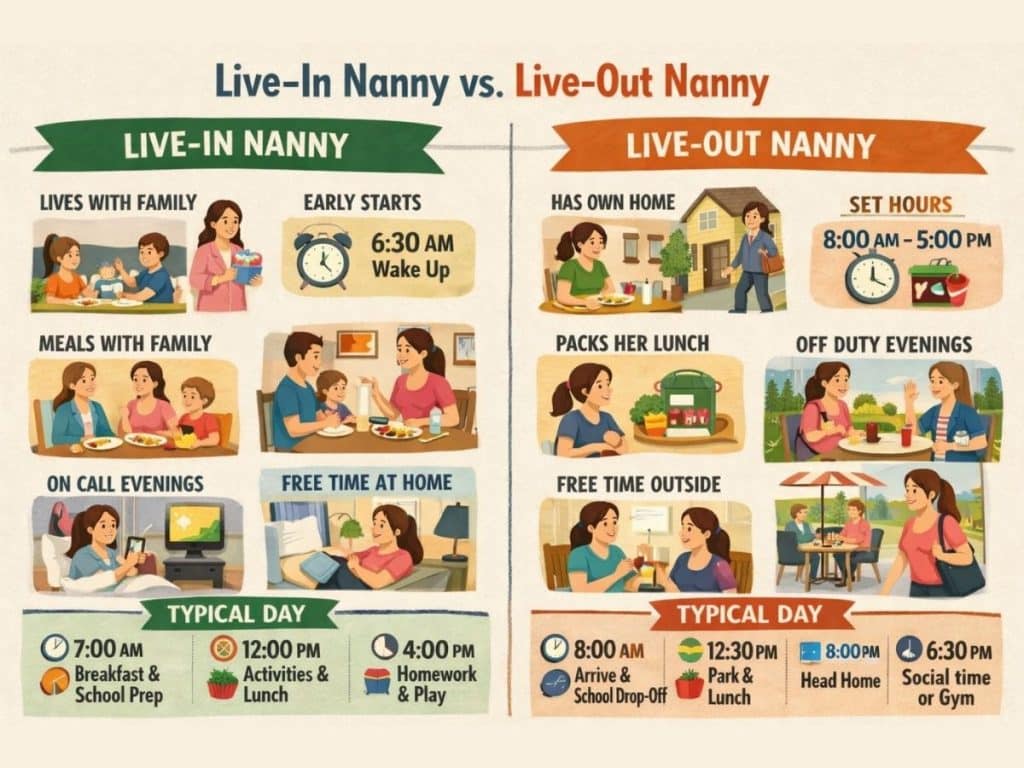
Many families choose live-in nannies for the convenience and flexibility they provide.

One of the biggest advantages of a live-in nanny is flexibility.
Families with demanding schedules—such as early mornings, late evenings, or frequent travel—benefit from having a caregiver already in the home.
This eliminates:
Live-in nannies can adapt more easily to shifting schedules.
Because the nanny lives in the home, families often experience greater consistency.
There are fewer disruptions caused by:
This consistency is especially valuable for families with young children who thrive on routine.
According to the American Academy of Pediatrics, consistent caregiving supports emotional development and stability in children.
For families who travel frequently, a live-in nanny offers significant advantages.
A nanny who already lives in the home can:
This level of continuity is difficult to replicate with other childcare options.
Live-in nannies often become an integral part of the household.
They gain a deeper understanding of:
This familiarity allows them to anticipate needs and provide more seamless support.
While live-in care offers many benefits, it also requires careful consideration.
One of the biggest adjustments for families is sharing their living space.
Even with designated private areas, having a live-in nanny means:
Families should be comfortable with this dynamic before choosing a live-in arrangement.
Because the nanny lives in the home, boundaries must be clearly defined.
Without structure, families may unintentionally expect availability outside of scheduled hours.
A professional nanny should have:
Clear expectations help maintain a healthy work-life balance.
If boundaries are not respected, live-in nannies may feel overworked or constantly “on duty.”
This can lead to burnout and impact the longevity of the placement.
Establishing structured schedules and respecting personal time is essential.
Hiring a live-in nanny comes with specific legal responsibilities.
Nannies are considered household employees, meaning families must follow labor laws and tax requirements.
The U.S. Department of Labor (FLSA) outlines rules for domestic workers, including wage and overtime requirements.
Additionally, families must comply with tax obligations outlined in the IRS Household Employer Guide (Publication 926):
Important considerations include:
It’s important to note that providing housing does not replace wage requirements.
Many families assume that hiring a live-in nanny is significantly less expensive than hiring a live-out nanny.
While housing is provided, the overall cost structure still includes:
Housing may be factored into compensation, but it must comply with labor laws.

Providing appropriate living accommodations is a critical part of hiring a live-in nanny.
Most professional arrangements include:
Some households provide separate living quarters or guesthouses.
Comfortable living conditions contribute to job satisfaction and long-term retention.
One of the most important factors in a successful live-in arrangement is clarity.
Families should clearly define:
Without clear expectations, misunderstandings can develop quickly.
For guidance on expectation-setting, review How to Set Clear Expectations With Your Nanny From Day One.

A live-in nanny arrangement should always include a detailed contract.
This contract should outline:
Clear agreements help prevent conflicts and ensure both parties understand their roles.
A live-in nanny can be an excellent solution for many households, but it’s not the right fit for everyone.
It works best for families who:
Families who prioritize privacy or have more structured schedules may prefer a live-out nanny arrangement.
You may benefit from a live-in nanny if:
A live-out nanny may be a better fit if:
Hiring a live-in nanny requires careful screening and placement.
Many families choose to work with professional nanny agencies because they:
This reduces hiring risks and improves long-term success.
Families can learn more in How to Choose the Right Nanny Agency for Your Family.
A successful live-in arrangement depends on:
Families should treat the nanny as a professional employee while also maintaining a respectful household environment.
Hiring a live-in nanny is a deeply personal decision that depends on your family’s lifestyle, needs, and preferences.
For the right household, a live-in nanny can provide unmatched flexibility, consistency, and support.
However, success requires thoughtful planning, clear expectations, and a commitment to maintaining professional boundaries.
By understanding both the benefits and challenges, families can make informed decisions that support long-term childcare success.
Schedule your consultation today!

Questions? We’re here to help.


