Discipline is one of the most important—and often misunderstood—parts of caring for children.
When a child refuses to clean up, hits a sibling, melts down over a transition, ignores an instruction, or tests the same boundary for the fifth time that day, adults naturally want the behavior to stop.
But how we respond matters.
There is an important difference between positive discipline and punishment. Punishment focuses primarily on making an unwanted behavior unpleasant enough that a child will not repeat it. Positive discipline focuses on teaching the child what behavior is expected, why the boundary matters, and what they can do differently next time.
That does not mean permissive parenting. It does not mean eliminating consequences. And it certainly does not mean allowing children to behave however they want.
For professional nannies, this distinction is especially important. A nanny is not simply managing a difficult moment. They are helping shape the child's daily routines, emotional regulation, communication skills, and understanding of expectations while also supporting the parents' broader approach to discipline.
Understanding what actually works can help families and caregivers create a calmer, more consistent environment for children.
What Is the Difference Between Discipline and Punishment?
The words discipline and punishment are often used interchangeably, but they are not necessarily the same thing.
At its core, discipline is about teaching.
It helps children learn boundaries, responsibility, self-control, problem-solving, and socially appropriate behavior.
Punishment, by contrast, is primarily intended to impose an unpleasant outcome after unwanted behavior.
The difference is easiest to understand by considering the question each approach asks.
Punishment often asks:
“How do I make sure the child regrets doing that?”
Positive discipline asks:
“What does this child need to learn, and what response will help teach it?”
Those questions can lead to very different caregiver responses.
Imagine a five-year-old throws a toy across the room after becoming frustrated.
A punitive response might focus on anger, shame, or an unrelated penalty.
A positive discipline response might be:
“I can see that you're frustrated. Toys are not for throwing. I'm going to put this toy away for now because someone could get hurt. When you're calm, we can talk about what you can do when you're angry.”
The child still experiences a consequence.
The boundary remains firm.
But the response connects the consequence to the behavior and teaches an alternative.
If a child intentionally throws a toy after being reminded not to, the toy may be put away temporarily.
If a school-aged child does not complete an agreed-upon responsibility before screen time, screen time may wait until the responsibility is complete.
If siblings are using an object unsafely while arguing over it, the object may be removed until they can use it appropriately.
These are consequences.
What makes them different from punishment is that they are designed to help children connect their choices to outcomes—not to humiliate, frighten, or emotionally overpower them.
Positive Discipline Starts With Understanding the Behavior
Children rarely wake up thinking, How can I make my caregiver's day more difficult?
Behavior communicates information.
A toddler may scream because they do not yet have the language to explain frustration.
A preschooler may refuse a transition because shifting from one activity to another is difficult.
A school-aged child may become argumentative because they are tired, embarrassed, anxious, overstimulated, or trying to establish more independence.
An older child may withdraw because something happened at school that they do not yet know how to discuss.
Understanding the cause does not mean excusing inappropriate behavior.
It helps the caregiver choose a response that has a better chance of working.
This is one of the principles we discuss in How Professional Nannies Handle Challenging Behaviors. Experienced caregivers look beyond the immediate behavior and consider developmental stage, triggers, routines, emotions, and environmental factors before deciding how to respond.
Why Punishment Can Stop a Behavior Without Teaching a Skill
Some punishments can produce immediate compliance.
If a child is afraid of what will happen after breaking a rule, they may stop the behavior in that moment.
But immediate compliance and long-term learning are not always the same thing.
A child who stops hitting because an adult shouts may learn:
“I should not hit when this adult is watching.”
What the child still needs to learn is:
“What can I do when I feel angry enough to hit?”
That is where discipline becomes instruction.
The caregiver can maintain the limit—“I won't let you hit”—while also teaching skills such as using words, asking for space, taking a pause, seeking adult help, identifying feelings, or finding a safer physical outlet for frustration.
The American Academy of Pediatrics also advises against physical punishment, threatening, insulting, humiliating, and shaming. Its guidance favors strategies such as positive reinforcement, limit setting, redirection, and setting expectations.
What Positive Discipline Looks Like in Everyday Nanny Care
Positive discipline is not a single technique.
It is a broader approach to behavior guidance.
Professional nannies may use several strategies depending on the child's age, temperament, developmental needs, the situation, and the family's expectations.
1. Clear Expectations Before Problems Begin
Children are more likely to succeed when they know what is expected.
Instead of waiting for something to go wrong, an experienced nanny may prepare a child before a transition:
“We have five more minutes at the playground. Then we're going home for lunch.”
Before entering a store:
“You can help me find the apples. We're not buying toys today.”
Before siblings begin a shared activity:
“Both of you can use the markers. If you're having trouble sharing, ask me for help instead of grabbing.”
Clear expectations reduce ambiguity.
The CDC notes that rules work best when caregivers are consistent, predictable, and willing to follow through. Families can review its guidance on creating clear family rules.
2. Calm, Firm Boundaries
Positive discipline is not vague.
A caregiver can be both warm and firm.
Consider the difference between:
“Stop being bad!”
and:
“I won't let you throw blocks. Blocks stay on the floor.”
The second response tells the child exactly what behavior needs to change.
It also avoids turning the child's behavior into a judgment about who they are.
Professional nannies often use brief, specific language during emotionally intense moments because children may have difficulty processing long explanations while upset.
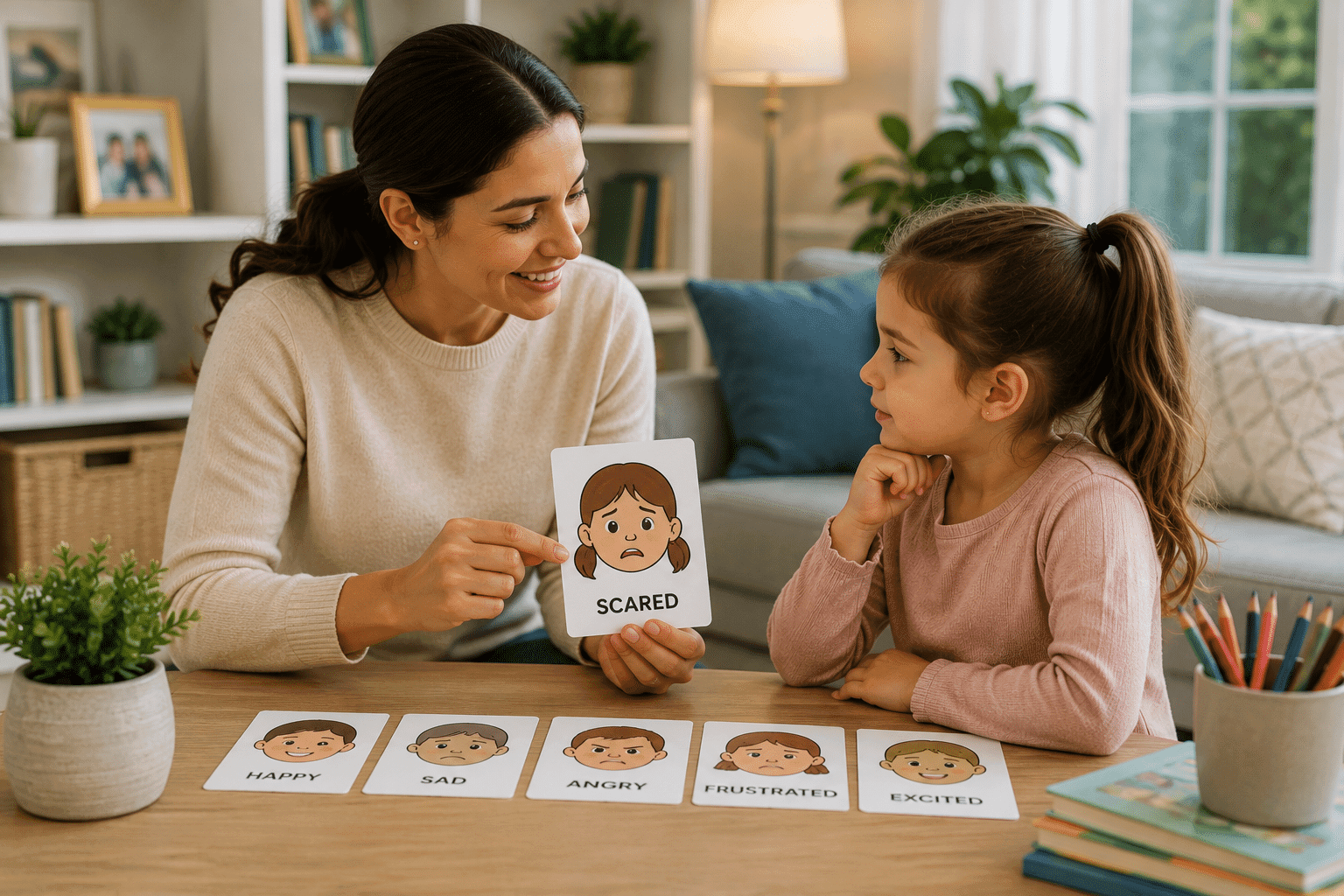
3. Naming Emotions Without Removing the Limit
A child can be angry and still be required to follow a boundary.
A nanny might say:
“You're really disappointed that it's time to leave. I understand. We're still leaving now.”
That sentence does two jobs.
It acknowledges the child's experience.
And it preserves the expectation.
Children gradually learn that emotions are acceptable even when every behavior is not.
This supports the same emotional-development skills explored in Elite Nanny League's broader child-development content and our existing guidance on professional behavior management.
4. Logical and Related Consequences
Consequences are generally easier for children to understand when they relate directly to what happened.
A child draws on the wall.
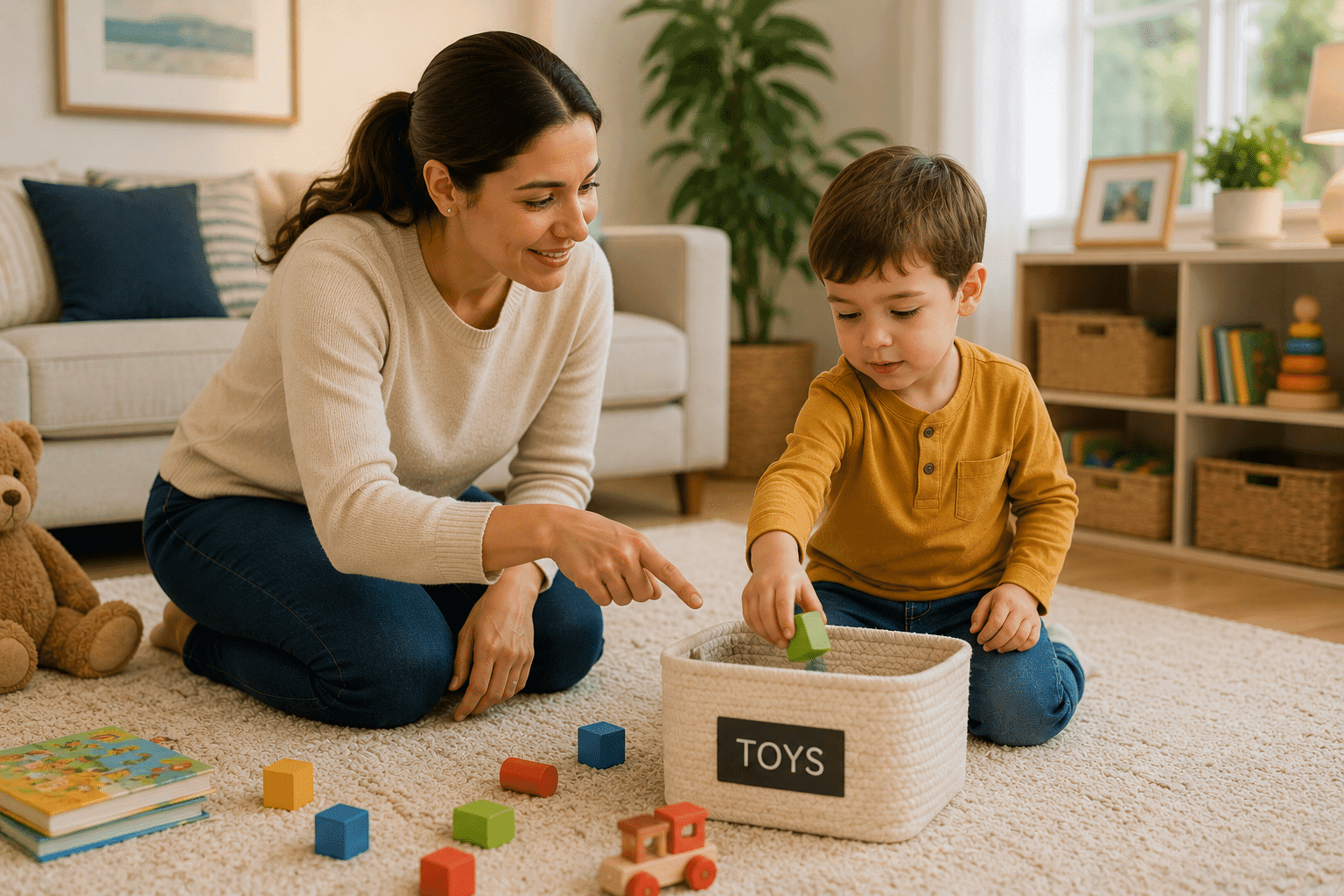
The caregiver involves them, at an age-appropriate level, in helping clean it.
A child uses a toy unsafely.
The toy is temporarily removed.
A child refuses to wear protective equipment required for an activity.
The activity pauses until the safety requirement is met.
The objective is not revenge.
The objective is responsibility.
5. Redirection Helps Children Practice a Better Choice
Redirection is particularly useful with younger children.
Simply saying “No” tells a child what not to do.
Redirection adds information about what they can do.
“Crayons are for paper. Here's your drawing pad.”
“We don't throw the truck. You can roll it across the floor.”
“You may not jump on the couch. Let's put the cushions on the floor and make a safe movement area.”
For toddlers and preschoolers, replacing an inappropriate behavior with an acceptable alternative can be more useful than lengthy explanations.
6. Positive Attention Reinforces What Is Working
Adults understandably notice problems.
The child screaming across the room demands more immediate attention than the child who quietly put their shoes away without being asked.
But positive discipline also requires noticing appropriate behavior.
Instead of only correcting mistakes, professional nannies intentionally acknowledge what children are doing well.
“You were frustrated, but you used your words. That was a strong choice.”
“I noticed you put the toys away when I asked the first time.”
“You waited for your turn even though it was hard.”
The CDC similarly emphasizes praise and positive attention as tools for strengthening desired behavior.
Positive Discipline Does Not Mean Every Situation Requires a Conversation
Sometimes adults hear the phrase positive discipline and imagine caregivers negotiating endlessly with children.
That is not the goal.
Safety-related situations often require immediate action.
If a toddler runs toward the street, the caregiver physically stops them.
If one child is hurting another child, the nanny intervenes immediately.
If a child is using an object dangerously, the object is removed.
The explanation can happen afterward, when everyone is safe and regulated.
Professional judgment means knowing when to teach through discussion and when a caregiver must act first.
Natural Consequences and Logical Consequences Are Different
Families often hear both terms.
A natural consequence occurs without an adult creating it.
A child refuses to bring a jacket on a mildly cool walk and feels chilly.
A child forgets a nonessential item and has to go without it.
A logical consequence is imposed by the adult but directly relates to the behavior.
A child repeatedly splashes water out of the bathtub after being asked to stop, so bath play ends.
Both approaches can teach cause and effect.
However, safety always comes first. Adults should never allow a dangerous “natural consequence” simply to prove a point.
Consistency Matters More Than Perfection
Children learn patterns over time.
If a behavior receives one response from a nanny on Monday, a completely different response from a parent on Tuesday, and no response from another caregiver on Wednesday, expectations become difficult to understand.
Consistency does not require every adult to use identical words.
It means the household shares the same fundamental boundaries.
If hitting is not allowed, it is not allowed regardless of which adult is present.
If screens are only available after certain responsibilities are completed, that expectation should not disappear whenever one caregiver is tired.
If bedtime begins at a predictable time, unnecessary day-to-day variation may create more resistance.
This is where professional nanny care becomes different from occasional babysitting.
A full-time or long-term nanny may spend dozens of hours each week with a child.
They will inevitably encounter tantrums, sibling disagreements, transitions, homework resistance, testing limits, emotional outbursts, and moments when boundaries need to be enforced.
Parents and nannies therefore need to discuss discipline before problems arise.
Important questions include:
What behaviors are non-negotiable in the household?
How do the parents typically respond to tantrums?
What consequences are acceptable?
What forms of discipline are not acceptable?
How should the nanny respond to aggression?
How much independence should the child have?
How are screen-time limits enforced?
What happens when siblings repeatedly fight?
How should the nanny communicate recurring behavior concerns?
When should parents be contacted immediately?
These conversations help prevent a common problem: the child receiving conflicting messages from the adults responsible for their care.
Discipline Strategies Should Change With Development
A strategy that works with a two-year-old may be inappropriate for an eight-year-old.
Young toddlers need short language, redirection, repetition, supervision, and simple boundaries.
Preschoolers can begin understanding basic cause and effect, simple family rules, emotional vocabulary, and logical consequences.
School-aged children can participate more actively in problem-solving, responsibility, repair, and conversations about expectations.
Older children increasingly need respect, appropriate autonomy, privacy, accountability, and opportunities to contribute to solutions.
This is why professional nannies need more than a collection of discipline “tricks.”
They need a working understanding of child development.
What Happens After the Difficult Moment Matters Too
A behavior episode does not always end when the crying stops.
After everyone is calm, a caregiver may revisit what happened.
With a preschooler:
“You were angry because your brother took the truck. What can you say next time instead of hitting?”
With a school-aged child:
“We both got frustrated during homework. What made that feel so difficult today?”
With siblings:
“How can we repair what happened and make a plan for sharing this tomorrow?”
These conversations transform discipline from an isolated correction into an opportunity to build self-awareness and problem-solving skills.
Connection and Accountability Can Exist Together
Children do not need to earn emotional safety by behaving perfectly.
A professional caregiver can maintain a consequence and still communicate warmth.
A child may lose access to a toy because they used it unsafely and still receive comfort while disappointed.
A child may need to repair a mess they made intentionally and still receive help getting started.
A child may be required to apologize or make amends and still be treated with dignity.
Connection does not cancel accountability.
Accountability does not require emotional rejection.
This balance is central to the gentle discipline techniques we have previously explored at Elite Nanny League: clear boundaries, calm leadership, respect, and emotional connection can coexist.
What Positive Discipline Should Not Become
Even well-intentioned approaches can become ineffective when misunderstood.
Positive discipline should not mean:
Repeated warnings with no follow-through.
If a caregiver states a reasonable consequence, consistency matters.
Allowing unsafe behavior because a child is upset.
Emotions deserve empathy. Unsafe behavior still requires intervention.
Turning every boundary into a negotiation.
Children can be given choices within appropriate limits without controlling every decision.
Using excessive explanations during a meltdown.
A dysregulated child may need calm, safety, and simple language before they can process a longer conversation.
Avoiding the word “no.”
Children need clear boundaries. Positive discipline is about how those boundaries are communicated and reinforced.
How Professional Nannies Can Respond to Common Behavior Challenges
When a Child Has a Tantrum
The nanny first considers safety and regulation.
They may reduce stimulation, remain nearby, use minimal language, acknowledge the emotion, and maintain the boundary that triggered the tantrum.
Once the child is calm, the caregiver can help them identify what happened and practice a more effective response.
When a Child Hits
The immediate priority is stopping the hitting.
A nanny may calmly block or separate the children and say:
“I won't let you hit.”
The caregiver can then help the child communicate the underlying frustration and repair the situation once calm.
When a Child Refuses to Clean Up
The nanny may provide a clear instruction, make the task manageable, offer a limited choice, or work alongside a younger child.
“Would you like to put away the blocks or the books first?”
The boundary remains: cleanup still needs to happen.
When Siblings Keep Fighting
Rather than simply deciding who is “bad,” the nanny can separate the immediate conflict, establish safety, hear each child's perspective, and coach problem-solving.
If they cannot use an object safely or respectfully, access to it may temporarily end.
When a Child Ignores Instructions
An experienced nanny first considers whether the instruction was developmentally appropriate and whether the child actually heard and understood it.
They may move closer, gain the child's attention, give one clear direction, reduce competing distractions, and follow through consistently.
How Families Can Evaluate a Nanny's Discipline Philosophy
“I use positive discipline” sounds reassuring in an interview.
But families should ask what that actually means to the candidate.
Useful interview questions include:
“Tell us about a time a child repeatedly ignored a boundary. What did you do?”
“How do you respond when a toddler hits another child?”
“What is your approach to consequences?”
“How do you handle a major tantrum in public?”
“What would you do if our approach to discipline differed from the approach used in your previous position?”
“How do you communicate recurring behavior concerns to parents?”
Specific scenarios reveal much more than labels.
Families should listen for calm judgment, developmental awareness, reasonable boundaries, communication, flexibility, and respect for the parents' role.
Why Nanny-Family Fit Matters in Discipline
There is no single household culture.
Families differ in how structured their routines are, how much independence they encourage, how they approach consequences, what they expect around manners, and which behaviors they consider most important.
A nanny may be highly capable but still be a poor fit if their fundamental behavior-management philosophy conflicts with the parents' expectations.
That is why discipline should be part of the matching conversation—not something families discover after placement.
Professional nanny placement involves more than evaluating years of experience. Communication style, judgment, expectations, childcare philosophy, references, professionalism, and compatibility all contribute to a successful long-term relationship.
Positive Discipline Is Ultimately About Teaching
The purpose of discipline is not to create children who never make mistakes.
Children are supposed to test limits, experience frustration, struggle with impulse control, make poor choices, and gradually learn better ones.
The adult's role is to provide the structure that makes that learning possible.
Effective positive discipline asks caregivers to remain clear about boundaries while remembering the larger goal:
Teaching children how to regulate emotions.
Teaching them how to communicate.
Teaching them how to repair mistakes.
Teaching them how to respect other people.
Teaching them how choices lead to consequences.
Teaching them what they can do differently the next time.
That is why positive discipline and accountability are not opposites.
When used thoughtfully, they reinforce one another.
Finding a Professional Nanny Who Aligns With Your Family
Families should not have to choose between a nanny who is warm and a nanny who can maintain boundaries.
Exceptional professional caregivers should be able to do both.
At Elite Nanny League, we believe successful nanny placements require more than identifying someone who simply has childcare experience.
Families benefit from professionals who understand development, communicate effectively, exercise sound judgment, respect household expectations, and know how to guide children through difficult moments with consistency and care.
If you are looking for a professional nanny whose caregiving approach aligns with your family's needs, Elite Nanny League can help guide you through the placement process.