How Nannies Can Prepare for a High-Standard InterviewRead More →
High-standard nanny interviews go beyond basic experience. Candidates should be ready to discuss judgment, communication, discretion, routines, and the needs of a private household.


A high-standard nanny interview is an opportunity for a professional caregiver and family to determine whether the position is a strong mutual fit. Families are evaluating more than childcare experience. They are also considering communication, judgment, discretion, organization, professionalism, and long term compatibility.
Nannies who prepare carefully can communicate their strengths with greater confidence and ask questions that help them understand the household before accepting a position.

Before an interview, review the position description carefully. Pay attention to the children’s ages, schedule, responsibilities, location, travel expectations, and required qualifications.
Think about how your experience relates to the role. If the family needs a nanny with newborn experience, school transportation, family assistant responsibilities, or travel experience, prepare examples that demonstrate your background in those areas.
A strong candidate does not simply repeat the résumé. The goal is to explain how your experience may support the specific household.
Prepare to discuss the positions you have held, the ages of the children, the length of each placement, and the responsibilities you managed.
Families may ask about:
Use specific examples when answering questions. Explain the situation, what you were responsible for, how you responded, and what the outcome was.
Families want to know how a nanny responds when the day does not go according to plan. Prepare examples that demonstrate calm decision-making, safety awareness, communication, and flexibility.
You may be asked how you handled a child’s illness, a schedule change, sibling conflict, a missed activity, a transportation delay, or a disagreement about routines.
Strong answers should show that you can make appropriate decisions while keeping parents informed. Avoid criticizing former families or sharing private details. Focus on your responsibilities and the professional approach you used.

Communication is a major part of a successful nanny placement. Families may ask how you provide updates, receive feedback, communicate concerns, and handle changes to the schedule.
Explain how you prefer to communicate during the day and how you keep parents informed about the children’s routines, meals, activities, and behavior.
A professional nanny should be able to communicate clearly without overwhelming parents with unnecessary information. It is also important to demonstrate that you can receive feedback without becoming defensive.
Professional nannies often learn private information about the families they support. Interview conversations may include questions about confidentiality, social media, household privacy, visitors, and communication outside the home.
Make it clear that you understand the importance of protecting family information. Do not share names, addresses, school details, travel plans, medical information, or personal stories about former employers.
The Federal Trade Commission’s background check guidance explains how background information may be used in employment decisions. Candidates should be prepared to participate in appropriate screening while asking questions about how their information will be handled.

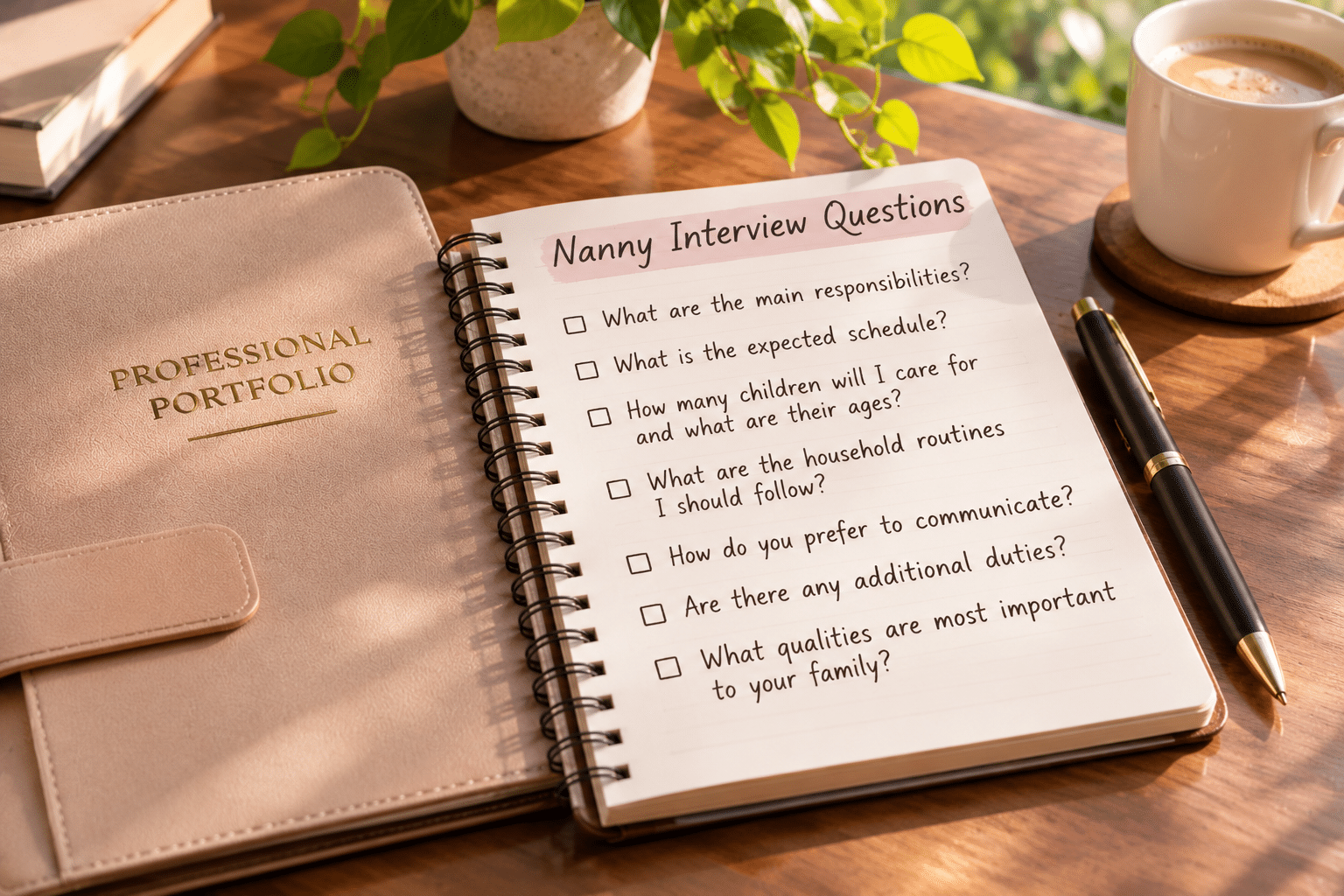
An interview should be a conversation, not only an evaluation of the nanny. Candidates should ask questions that help them understand the household and determine whether the role is appropriate.
Important questions may include:
These questions demonstrate preparation while helping the nanny evaluate whether the household’s needs align with their experience and availability.
Before accepting a position, make sure you understand the schedule, guaranteed hours, compensation, overtime, paid time off, holidays, benefits, mileage, travel, and other employment terms.
Ask how additional hours are handled and whether the schedule changes during school breaks, holidays, or family travel.
The U.S. Department of Labor’s domestic service guidance provides general information about household employment. Candidates should ask for a written agreement that clearly explains the terms of the position.
Arrive on time, dress appropriately, bring an updated résumé, and make sure your phone is silent during the conversation. If the interview is virtual, test your camera, audio, lighting, and internet connection beforehand.
Professional presentation also includes how you speak about previous families, employers, and children. Use respectful language and avoid sharing information that should remain confidential.
Families may also notice whether you listen carefully, answer questions directly, and show genuine interest in the children and responsibilities of the position.
Confirm that your professional references are available and comfortable speaking with prospective employers. Let them know what type of position you are interviewing for so they can provide relevant information.
Make sure the employment dates and responsibilities listed on your résumé match the information your references can confirm.
Strong references should be able to discuss your reliability, communication, relationship with the children, ability to follow household expectations, and overall professional conduct.
If a responsibility or expectation is unclear, ask for more information. Candidates should not feel pressured to accept a position before understanding the schedule, duties, compensation, living arrangements, or household environment.
Clarifying questions can prevent misunderstandings later. A professional interview should give both the family and nanny enough information to make an informed decision.
The right nanny position should align with your experience, schedule, professional strengths, and long term goals. A strong interview helps both sides decide whether the relationship may be successful.
Elite Nanny League connects professional caregivers with families seeking experienced childcare and household support. Review our professional nanny requirements, explore available nanny opportunities, or learn more about Elite Nanny League.
Preparing for a high-standard nanny interview involves more than reviewing your résumé. Professional candidates should prepare examples, understand the position, ask clear questions, protect family privacy, and communicate their experience with confidence.
The interview is an opportunity for both the family and nanny to evaluate the relationship. Clear communication at the beginning can help create a more successful and sustainable placement.
Bring an updated résumé, professional references, copies of current certifications, and any relevant documents requested by the agency or family.
Ask about the children, schedule, responsibilities, communication preferences, household expectations, travel, compensation, benefits, and long term goals.
Speak respectfully and professionally. Do not share private details, personal information, addresses, medical information, or confidential family circumstances.
A nanny should not feel pressured to accept before understanding the full position. Review the written agreement and clarify any questions before making a final decision.
Elite Nanny League connects professional caregivers with families seeking dependable, experienced household support.
Submit your nanny application to begin the conversation.
You can also review our professional nanny requirements.
High-standard nanny interviews go beyond basic experience. Candidates should be ready to discuss judgment, communication, discretion, routines, and the needs of a private household.
A clear nanny job description helps families communicate expectations and gives qualified candidates the information they need to decide whether the role is a strong fit.
A strong nanny candidate profile makes professional experience easier to understand and helps families evaluate qualifications, communication, and role fit.


