Hiring a nanny is about more than just finding someone to watch your child—it’s about entrusting your family’s safety, well-being, and happiness to another person. That’s whynanny references are one of the most important factors when hiring a nanny. Strong references help you verify experience, reliability, and character before making a long-term commitment.
If you’re searching for thebest nannies Houston offers or seeking expert nanny agency tips on vetting candidates, this guide will walk you through why references matter, how to check them effectively, and how to use them alongside background checks to find a truly reliable nanny.
Why Are Nanny References So Important?
References serve as a window into a nanny’s past performance and compatibility with families, providing insights that resumes and interviews alone can’t offer. They can reveal:
How the nanny interacts with children and parents
Reliability and punctuality in real-world scenarios
Trustworthiness and professionalism
Ability to handle emergencies and challenges
Communication style and flexibility
Without solid references, you’re taking a bigger risk. Families who invest time in checking references report higher satisfaction and longer-lasting placements.
How to Check Nanny References Effectively
1. Ask for Multiple References
Request at least 3 references from previous families.
Include recent employers and those with similar childcare needs.
2. Prepare Your Questions
Focus on open-ended questions such as:
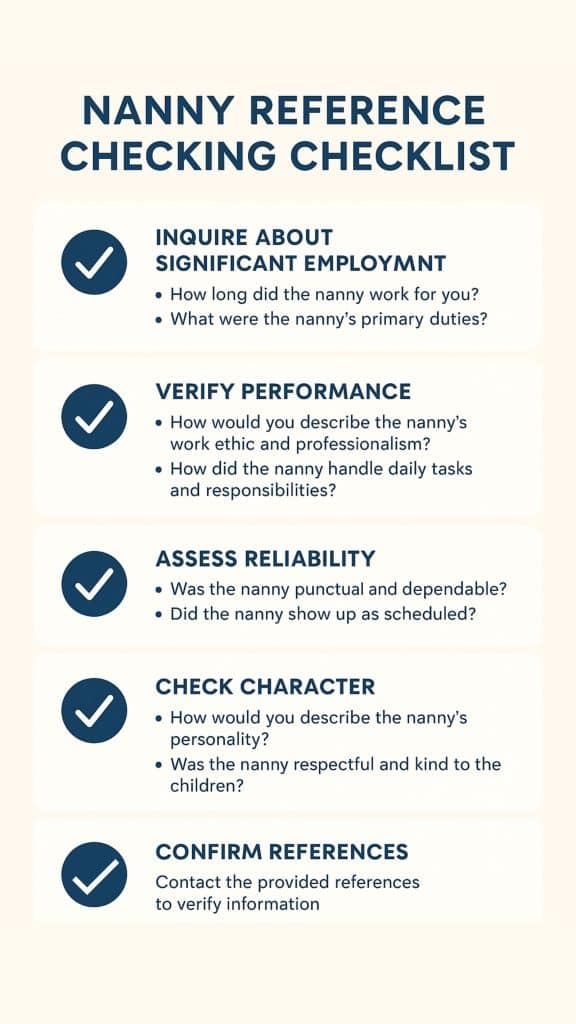
How did the nanny interact with your child?
Was the nanny reliable and punctual?
How did they handle emergencies or difficult situations?
Did the nanny communicate clearly and respectfully with your family?
Would you rehire this nanny? Why or why not?
3. Verify Authenticity
Call references directly rather than relying on written testimonials.
Be wary of vague or overly positive answers without specifics.
4. Take Notes and Compare
Look for consistent themes or red flags.
Compare references against what the nanny shared during the interview.
The Role of Background Checks Alongside References
While references provide personal insights, a thorough nanny background check is essential to verify identity and ensure safety. Background checks typically include:
Criminal records search
Employment verification
Driving record check (if applicable)
Sex offender registry check
Combining references with background checks creates a comprehensive picture of your nanny’s qualifications and reliability.
What To Do if References Are Limited or Unavailable
It’s not uncommon for newer nannies or career changers to have limited references. In those cases:
Ask for written character references from non-family employers or community members
Conduct more in-depth interviews focusing on skills and situational responses
Consider trial periods with close supervision to build trust gradually
Testimonial: How Checking References Made a Difference
"When we hired our nanny through Elite Nanny League, we were impressed by how thoroughly they vetted her references. Speaking with previous families gave us confidence in her experience and temperament. It’s made all the difference for our peace of mind." — Mark and Elena S., Houston
Visual Guide: Nanny Reference Checking Checklist
Frequently Asked Questions About Nanny References
Q: How many references should I check before hiring? A: At least three, including recent families and those with similar childcare needs.
Q: What if a nanny refuses to provide references? A: Consider it a red flag. Reliable nannies understand the importance of references.
Q: Can I trust online reviews alone? A: Online reviews are helpful but should never replace direct conversations with references.
Q: How do references differ from background checks? A: References provide personal insights; background checks verify legal and safety status.
Q: Should I check social media profiles of nanny candidates? A: It can provide additional context but use discretion and respect privacy.
Clear expectations are the foundation of a successful nanny placement. Learn how to communicate responsibilities, boundaries, schedules, and feedback from day one to prevent misunderstandings, reduce turnover, and build a stable, long-term partnership with your nanny.
Many nanny placements break down within the first 90 days due to mismatched expectations, incomplete vetting, and communication gaps. Learn the most common reasons nanny placements fail — and how families can prevent early turnover and build long-term stability.
Hiring a nanny is more than filling a childcare gap—it requires emotional, financial, and logistical readiness. This guide helps families determine if they’re truly prepared for in-home childcare and what to consider before beginning the nanny hiring process.