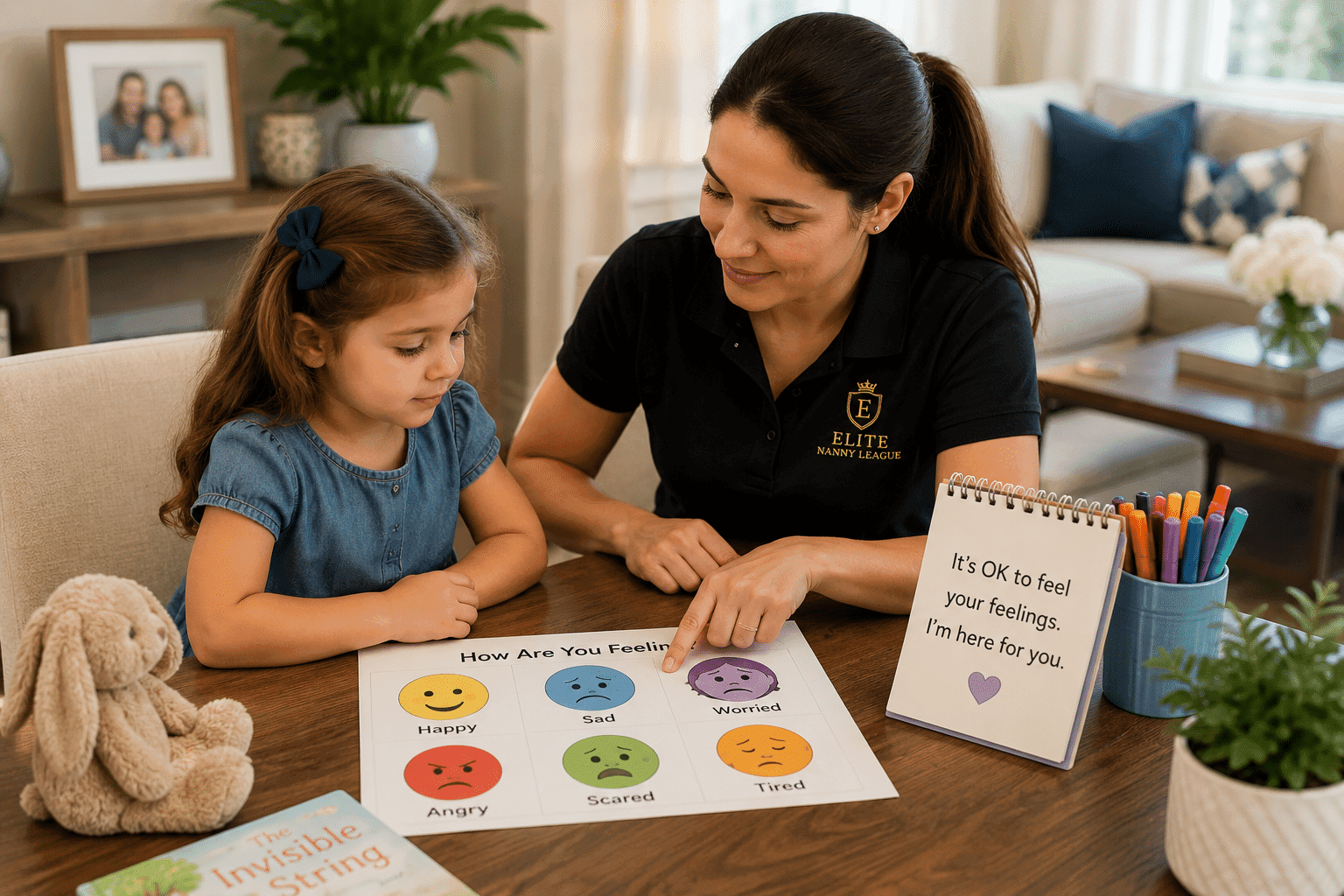
A new caregiver can bring relief, support, and stability to a family, yet the transition can still feel enormous to a child. Even when parents have carefully selected an experienced nanny, a young child may cry at the door, cling to a parent, refuse familiar routines, or seem unusually emotional during the first days or weeks.
Separation anxiety and caregiver transitions often intersect because children are being asked to manage two experiences at once: saying goodbye to a familiar attachment figure and learning to trust someone new. For many infants, toddlers, and preschoolers, some distress around separation is a normal part of development. Older children can also struggle when a caregiver change follows another major transition, such as moving, starting school, welcoming a sibling, or saying goodbye to a previous nanny.
The goal is not to eliminate every tear or create a “perfect” first day. It is to give the child repeated evidence that the adults around them are calm, reliable, and safe; that the parent leaves and returns; and that the nanny can offer comfort, structure, and connection while the parent is away.
Understanding Separation Anxiety During Caregiver Transitions
Separation anxiety is the distress a child may feel when apart from a parent or another primary caregiver. It can show up as crying, clinging, protest, hesitation, repeated questions about when a parent will return, or difficulty settling after a goodbye.
The American Academy of Pediatrics through HealthyChildren.org explains that separation anxiety is common in early childhood and can become especially noticeable as babies and toddlers begin to understand that a parent can leave while they remain behind. That developmental awareness is important, but it can also make departures emotionally difficult.
A caregiver transition adds another layer. A child is not simply coping with a parent leaving the room; they are learning the rhythms, voice, expectations, comfort style, and personality of a new adult. Even a highly qualified nanny is still unfamiliar at first.
This is why a difficult goodbye should not automatically be interpreted as a poor nanny match. Adjustment is a process, and a child’s reaction may reflect the significance of the change rather than the quality of the caregiver.
Why Caregiver Changes Can Feel So Significant to Children
Adults often understand the practical reason for a new nanny: a parent is returning to work, the family needs more consistent support, a previous caregiver moved on, or the household’s schedule changed. Children experience the same event differently.
Young children rely heavily on predictability. They learn what breakfast looks like, who helps with shoes, what happens before nap, which songs are sung in the car, and who responds when they are upset. A new nanny changes some of those familiar patterns, even when the overall routine remains the same.
Temperament matters too. Some children enthusiastically approach new people. Others observe first, stay close to a parent, and need more time before they participate. Neither response is inherently better. A child who is slow to warm up may simply need a more gradual introduction and more repeated experiences before the new relationship feels comfortable.
Previous experiences also shape transitions. A child who recently changed schools, moved homes, welcomed a sibling, or lost a beloved caregiver may have less emotional bandwidth for another change. Professional nannies and parents can respond more effectively when they view behavior in context rather than assuming resistance is defiance.
Common Signs a Child Is Struggling With the Transition
Separation-related distress is not always limited to the moment a parent walks out the door. Some children become clingy during the morning routine because they anticipate the departure. Others seem fine at goodbye but show their stress later through irritability, sleep changes, regression, or an increased need for reassurance.
A younger child may cry, reach for a parent, refuse comfort from the nanny, or carry a favorite comfort object constantly. A preschooler may repeatedly ask, “When is Mommy coming back?” or become upset when the nanny suggests an unfamiliar activity. A school-age child may complain of a stomachache before a parent leaves, resist the nanny’s help, or worry excessively about what the parent is doing.
These behaviors can be part of a temporary adjustment. What matters is the broader pattern: Is the child gradually becoming more comfortable? Can the nanny help them settle? Are there moments of play, curiosity, laughter, or connection once the initial distress passes?
Parents should look for progress rather than demanding instant comfort. Small milestones—accepting a snack from the nanny, showing them a favorite toy, asking for help, or returning to play after goodbye—can be meaningful signs that trust is developing.
How Parents Can Prepare a Child for a New Nanny
Introduce the Nanny Before the First Full Day
Whenever possible, let the child meet the nanny while a parent is still present. The first interaction does not need to be elaborate. Reading a book, having a snack, playing with blocks, or taking a short walk together can be enough.
The goal is familiarity. The child gets to observe the nanny without immediately having to manage a separation. The nanny also gets valuable information about the child’s interests, communication style, comfort level, and routines.
Children benefit from honest, age-appropriate explanations. A parent might say, “Maria is going to stay with you while I work. You will have breakfast, play, and have lunch together. I will come back after your nap.”
For younger children, “after nap” or “before snack” is often easier to understand than a clock time. HealthyChildren.org similarly recommends describing a parent’s return using language that makes sense within the child’s day.
Avoid making promises about how the child will feel. “You’re going to love your nanny!” may create pressure. A simpler message—“She is here to take care of you, and I will come back”—is both reassuring and truthful.
Keep Familiar Routines in Place
During a caregiver transition, predictability is especially valuable. If breakfast usually happens at the same time, nap follows a particular book, or a child carries the same stuffed animal during quiet time, preserve those anchors whenever possible.
The nanny does not have to replicate the parent exactly. In fact, each caregiver will develop an individual relationship with the child. But familiar routines reduce the number of changes the child is processing at once.
Create a Short, Predictable Goodbye Ritual
A goodbye ritual can be as simple as a hug, a phrase such as “I love you, you are safe, I’ll see you after snack,” and a wave at the window. The specific ritual matters less than its consistency.
ZERO TO THREE recommends predictable goodbye routines and specifically advises parents not to sneak away. Leaving without saying goodbye may seem easier in the moment, but it can make a child more watchful because they are unsure when a parent might disappear.
Once the goodbye is complete, leave calmly. Repeatedly returning after the child cries can unintentionally make the separation longer and more confusing.
How Professional Nannies Can Ease Separation Anxiety
A skilled nanny does not take a child’s initial rejection personally. They understand that crying for a parent does not mean the child dislikes them or that the placement is failing. Their job is to remain emotionally steady enough to help the child borrow some of that steadiness.
Start With Connection, Not Performance
The first days are not the time to prove how many crafts, outings, or educational activities can fit into a schedule. Connection comes first.
A nanny might sit nearby while the child plays, read a familiar book, offer a favorite snack, or follow the child’s lead in a simple activity. For a hesitant child, gentle presence is often more effective than enthusiastic pressure.
Validate Feelings Without Making Them Bigger
Professional nannies can acknowledge what the child is experiencing: “You miss Dad. It’s hard when he leaves.” The message is not that the feeling is dangerous or needs to disappear immediately. The message is that the feeling is understandable and the nanny can stay present through it.
Children learn trust through repetition. The nanny arrives when expected. Breakfast happens. The parent leaves. The nanny follows familiar routines. The child is comforted when upset. The parent returns.
Over time, these ordinary experiences become powerful evidence that the new caregiving arrangement is safe and dependable.
Respond to Behavior as Communication
Separation stress can look like tantrums, refusal, irritability, or testing limits. A professional caregiver looks beyond the surface behavior and asks what the child may be communicating.
That does not mean abandoning boundaries. A nanny can validate distress while still maintaining expectations: “You are angry that Mom left. I will not let you hit. I can sit with you while your body calms down.”
Why Consistency Matters More Than a Perfect First Day
Parents understandably want reassurance that the placement is working. After a difficult first morning, it can be tempting to change the plan, lengthen the goodbye, work from home “just in case,” or step back in every time the child becomes upset.
Sometimes adjustments are necessary, but constant changes can make the transition harder to understand. Children gain confidence when the sequence of events becomes predictable.
Progress may be uneven. A child can have three calm mornings and then cry intensely on the fourth. Fatigue, illness, a disrupted weekend, or a developmental leap can temporarily make separation harder again. A setback does not erase the trust that has already been built.
The better question is not, “Did my child cry today?” It is, “Over time, is my child learning that the nanny is a safe, reliable caregiver?”
What Parents and Nannies Should Communicate During the Transition
Strong communication between parent and nanny can prevent small difficulties from becoming larger ones. Before the first independent day, parents should explain the child’s usual routines, comfort strategies, sleep patterns, food preferences, favorite activities, fears, sensitivities, and any recent family changes that may affect behavior.
The nanny should also share what they observe. Did the child settle five minutes after the parent left or remain distressed for an hour? What helped? Was there a particular book, song, snack, or activity that created connection? Did the child become upset again before lunch or nap?
These details matter because parents often see only the goodbye, while the nanny sees what happens after the door closes.
Communication should remain factual rather than dramatic. “She cried for seven minutes, then asked to read her dinosaur book and was cheerful through breakfast” gives a parent useful context. It also allows both adults to repeat strategies that are working.
A parent may be tempted to leave while the child is distracted. The immediate departure might be quieter, but the child loses the chance to learn a predictable goodbye-and-return pattern.
Avoid Prolonging the Departure
A goodbye that repeatedly restarts can increase uncertainty. Once the parent has offered reassurance, completed the ritual, and transferred care to the nanny, a calm departure is usually clearer than lingering.
Avoid Shaming the Child for Crying
Statements such as “Big kids don’t cry” or “There’s nothing to be upset about” dismiss the child’s experience. A more useful message is, “I know goodbye is hard. You are safe with your nanny, and I will come back.”
Avoid Forcing Immediate Affection
A child should not be required to hug, kiss, or show enthusiasm toward a new caregiver. Warmth develops at different speeds. Respecting a child’s physical and emotional boundaries can support genuine trust.
Avoid Changing the Plan Every Day
If each difficult morning produces a completely new response, the child has less opportunity to learn what to expect. Parents and nanny should agree on a simple transition plan and give it enough consistency to work.
Supporting Children With Slow-to-Warm-Up Temperaments
Some children need significantly more observation time before they feel comfortable with a new person. ZERO TO THREE’s guidance on slow-to-warm-up temperaments explains that some children are naturally cautious around unfamiliar people or situations and may benefit from gradual introductions and advance notice.
For these children, the nanny can reduce pressure. Instead of immediately asking for conversation, hugs, or participation, the nanny can sit nearby, narrate what they are doing, offer a familiar activity, and allow the child to approach when ready.
Parents can help by communicating confidence in the nanny without demanding a specific emotional response from the child. “You can stay close to me while Sarah reads the book” is different from “Go sit with Sarah; you need to get used to her.”
Over time, slow-to-warm children can build very strong caregiver relationships precisely because trust has been allowed to develop at a pace that feels safe to them.
When Separation Anxiety May Need Additional Support
Not every difficult transition indicates an anxiety disorder. Many young children protest separation, especially during periods of change. The key distinction is whether the anxiety is developmentally expected and improving, or whether it is unusually intense, persistent, and interfering with daily life.
The Child Mind Institute’s guide to separation anxiety disorder explains that clinically significant separation anxiety goes beyond what would ordinarily be expected for a child’s age and can interfere with activities such as school, playdates, sleep, or normal family routines. Children may also experience persistent worries about something happening to a parent or physical symptoms such as headaches or stomachaches.
Parents should consider speaking with their pediatrician or a qualified child mental-health professional when separation distress remains severe, does not improve with time and consistency, significantly limits the child’s activities, disrupts sleep or school, or causes substantial distress for the child and family.
A nanny can provide observations and support strategies established by the family and qualified professionals, but a nanny should not diagnose or independently treat an anxiety disorder. The best childcare partnerships recognize when a child may benefit from additional professional guidance and then work collaboratively with the family.
How the Right Nanny Match Supports a Smoother Transition
Caregiver transitions are easier when the adult entering the child’s life is not only qualified but genuinely compatible with the family.
Experience matters. So do patience, emotional intelligence, communication style, reliability, judgment, and the ability to respect a child’s temperament. A nanny who thrives with highly social school-age children may have a different caregiving style from one who excels with sensitive toddlers who need a slower pace.
This is one reason professional placement is about more than filling a schedule. Elite Nanny League’s professional nanny services focus on helping families identify experienced caregivers whose skills, personality, expectations, and childcare approach align with the household.
Families can also meet our professional nannies to better understand the caliber of experienced career caregivers represented by Elite Nanny League.
For Houston families seeking professional nanny placement and households nationwide, thoughtful matching can support the entire transition process. The right nanny is not expected to replace a parent. They become another dependable adult in the child’s world—someone who learns the child’s cues, protects familiar routines, communicates with the parents, and builds a relationship through repeated acts of care.
Helping Children Build Confidence in a New Caregiving Relationship
The most successful caregiver transitions are rarely defined by a completely tear-free beginning. They are defined by what happens over time.
A child who once cried at the door begins waving goodbye. A toddler who refused comfort starts bringing the nanny a favorite book. A preschooler asks whether the nanny will be there tomorrow. A school-age child begins sharing stories about the day without being prompted.
These moments reflect growing confidence. The child is learning an important lesson: they can love and depend on their parent while also building safe relationships with other trusted adults.
Professional nannies support that process through consistency, patience, responsive care, and respect for the child’s individual pace. Parents strengthen it by communicating confidence, keeping goodbyes predictable, sharing useful information, and allowing the nanny enough space to develop an authentic relationship with the child.
If your family is preparing for a caregiver transition, struggling with repeated nanny turnover, or searching for a professional who can provide consistent long-term care, Elite Nanny League can help. Our personalized placement process is designed to match families with experienced nannies based on childcare needs, household expectations, personality, and long-term compatibility.
Educational note: This article provides general childcare information and is not a substitute for medical or mental-health advice. Parents with concerns about a child’s anxiety, development, or daily functioning should consult an appropriate healthcare professional.
Find a Nanny Who Can Become a Trusted Part of Your Child’s World
Ready to find a professional nanny who can provide the consistency, patience, and thoughtful care your family needs? Elite Nanny League carefully matches families with experienced caregivers based on personality, childcare philosophy, household needs, and long-term compatibility.